 English
 Chinese

5 Steps to Choose the Perfect 3D Laser Crystal Engraver (2027 Beginner’s Guide)
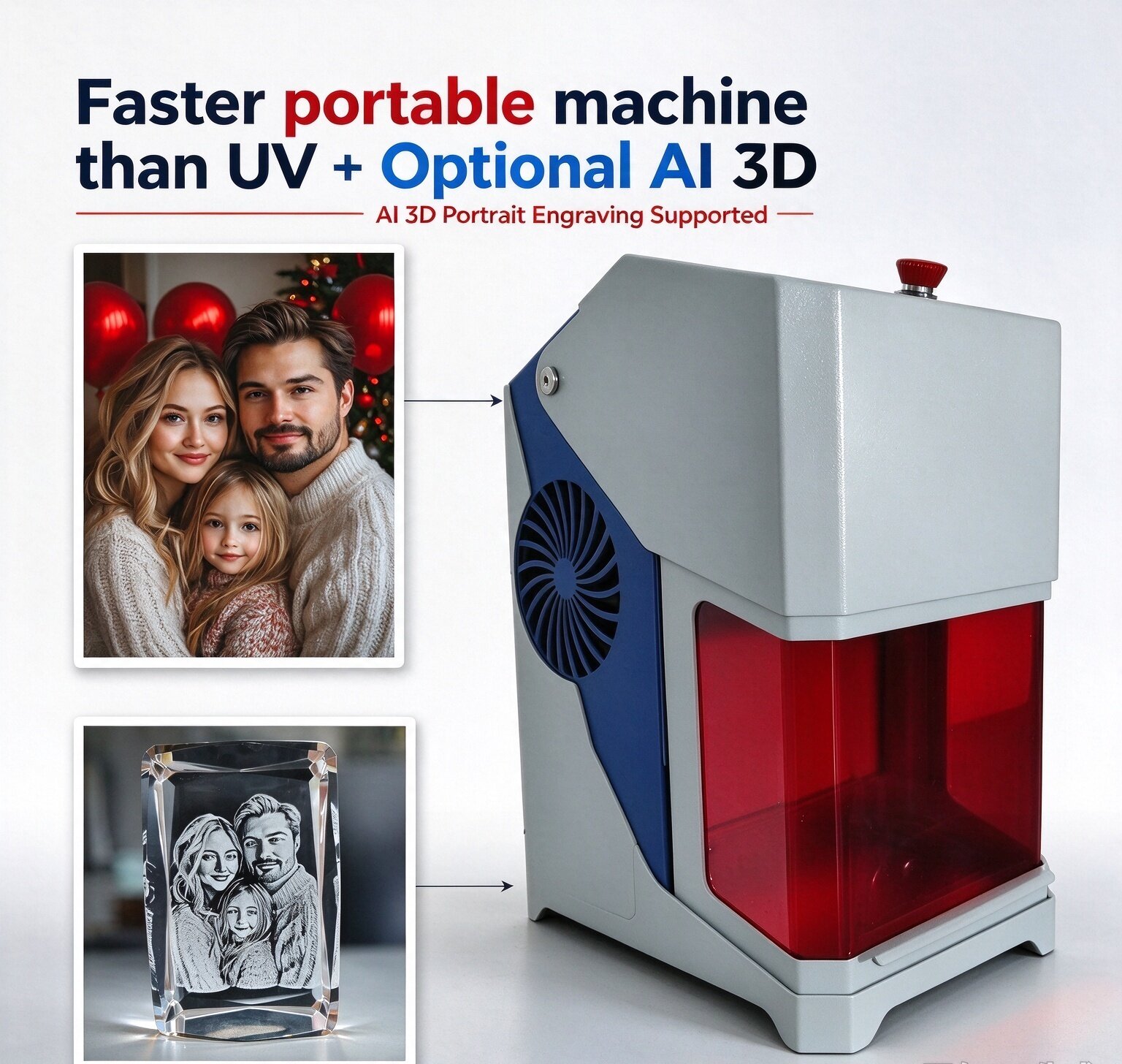
If you’re a hobbyist, Etsy seller, small business owner, or startup entrepreneur looking to break into the custom crystal and 3D engraving market, choose the right 3D subsurface laser crystal engraver is make-or-break for your business.
Many first-time buyers fall into the same costly trap: they shop for a compact machine and opt for low-cost UV models advertised with broad engraving capabilities. However, once the machine arrives, they quickly discover major limitations for 3D crystal engraving — including restricted usable engraving sizes, slow speeds, inconsistent output quality, and a steep learning curve without proper training.
To help you invest wisely and avoid common beginner pitfalls, I’ve put together this 5-step ultimate buying guide tailored specifically for new users. By the end, you’ll know exactly which machine fits your workflow, products, and budget.
Step 1: Define Your Business Model
1. Small Business & Handmade Store (Etsy/Shopify Sellers)
This is the most popular scenario. You take custom orders for 3D crystal portraits, anniversary gifts, pet memorial crystals, and personalized glass decor. You need a stable, high-precision machine that supports daily order output without frequent errors.
2. Commercial & Bulk Production
For large studios, gift wholesalers, and factory production. You handle high-volume batch orders, oversized crystal blocks, and ultra-fine high-definition engraving. Industrial-grade equipment with long-duration stability is required.
Step 2: Confirm Your Materials & Maximum Workpiece Size
3D internal laser engraving technology only works optimally on transparent, light-permeable materials. Knowing your regular materials and maximum product size will immediately filter out mismatched machines.
Materials Compatibility
Most custom gift businesses focus on optical crystal, clear glass, and transparent acrylic. Entry and mid-tier machines handle these materials perfectly. If you plan to work with premium ultra-white glass or high-purity crystal for luxury custom orders, you will need a device with advanced focusing technology to avoid fuzzy dots, internal cracks, or uneven engraving.
Undersized machines limit your product range, while oversized equipment wastes workshop space and increases unnecessary costs.
532nm green laser machines: Compatible for internal engraving on crystal, glass and acrylic - Budget UV laser machines: Only deliver acceptable results on consistent, high-grade K9 crystal. Minor variations in crystal raw material often ruin engraving results. They are generally not suitable for glass or acrylic engraving and are mostly limited to simple cube-style crystal blanks, not thin delicate ornaments.
Working Volume Rule
Always choose your machine based on your largest product size, not the smallest.
Hobby use: 100×100×80mm working area
Small business standard: 150×150×120mm (best seller for Western custom gift orders)
Commercial bulk production: 200mm+ large working volume
Avoid machines that are too small (they restrict your product range) or oversized units that waste workshop space and add unnecessary upfront cost.
Step 3: Focus on These 3 Core Specs (Skip the Fluff)
Manufacturers always list dozens of parameters to confuse buyers. As a beginner, you only need to verify three key specifications to judge machine quality.
1. Laser Wavelength — 532 nm green Laser
Green laser is the reliable, professional choice for stable internal engraving across crystal and glass. 355nm ultraviolet lasers have grown popular in the marketplace and are marketed for crystal engraving, but most UV laser suppliers do not clearly disclose their critical limitations for subsurface work:
· Slow engraving speed
· Limited effective engraving area: usually no larger than a 70×70mm circle. Many listings advertising a 200×200mm work area refer to surface marking for other materials; UV lasers are primarily designed for surface engraving, not deep subsurface crystal work.
· Manual focus required for consistent results
· Laser source is a consumable part and will require replacement
· Some suppliers exclude training and meaningful warranties after purchase
UV laser machines carry a lower upfront price tag, yet for a sustainable professional crystal and glass internal engraving business, a 532nm green laser is usually the better long-term investment. Many buyers who start with UV lasers end up purchasing a separate green laser later because UV systems cannot support a full custom glass and crystal product lineup.
2. Engraving Precision — Pulse width
Purchase a laser machine which need highest engraving quality, the image and the dots size of the laser is important, choose a laser box pulse width of 6ns or less, and make high resolution.
3. Engraving Stability & Speed
GGreen laser technology for glass subsurface engraving has been proven stable since the early 2000s. UV laser systems adapted for crystal subsurface engraving are relatively new and still cannot reliably handle large-area engraving. Green laser sources commonly have a service life of 10+ years, while UV laser sources often degrade noticeably within 1–2 years and require full replacement.
Hobbyists do not need to prioritize fast engraving speeds. If you run an order-focused gift business, choose a machine with adjustable, consistent engraving speed. Stable operation reduces scrap rates and boosts daily output.
Step 4: Choose the Right Budget Tier & Avoid Scams
3D subsurface laser engravers cover a wide price spectrum. Below are three clear budget tiers tailored for the Western market, to help you avoid overspending or buying unreliable low-end equipment.
Entry-Level (Hobby Grade) Ideal for DIY enthusiasts. Budget-friendly with basic acceptable precision, great for personal crafts and small trial batches. Not recommended for full-time store operations, as they lack reliable continuous-run capacity.
Mid-Range (Commercial Grade — Most Recommended) This is the best fit for 90% of small business sellers. It balances precision, stability and cost. It supports extended continuous operation, produces commercial-grade high-definition engravings, and fully meets custom gift order demands for EU and US marketplaces.
High-End Industrial Grade Built only for large factories and premium custom studios. It delivers ultra-high speed and stability at a premium price point. It is unnecessary and cost-prohibitive for individual beginners and small startups.
Pro Tip: Prioritize machines with an integrated metal frame. A rigid chassis minimizes positional drift after long hours of operation and preserves engraving accuracy over time.
Step 5: Verify Warranty & After-Sales Support
For cross-border buyers, after-sales service is extremely important. Once the machine breaks down without effective support, your entire order workflow will stop and cause economic losses.
Before purchasing, confirm three core after-sales guarantees:
Official Warranty: At least 1-year full machine warranty and extended warranty for the core laser source.
Lifetime Technical Support: English remote guidance, parameter adjustment, and online troubleshooting to solve operational problems at any time.
Complete Spare Parts Supply: Ensure the supplier has sufficient spare parts inventory to avoid long downtime delays.
Final Summary
Choosing the right 3D laser crystal engraver is not about picking the priciest model or the one with the most advertised specs. The best machine matches your unique business model, product range and long-term order volume.